
Understanding Phenetole and Its Fragrance Benefits
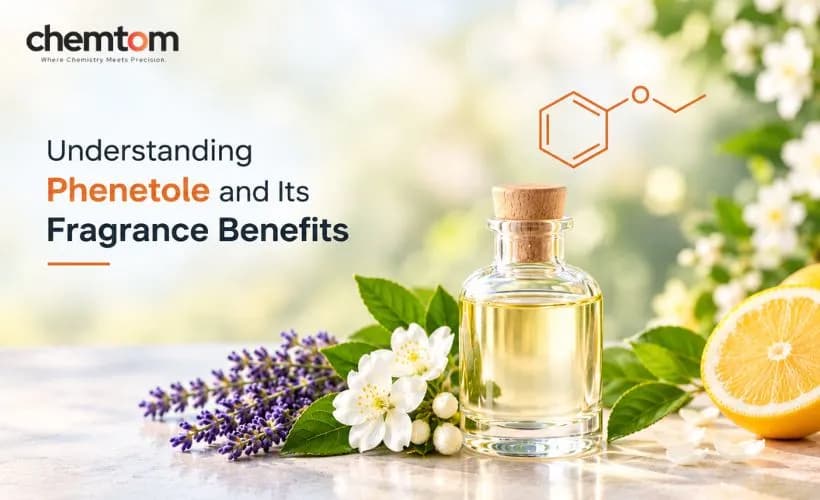
Walk into any perfume lab and you'll find that the finished bottle on the shelf owes much of its character to dozens of quiet, unglamorous building blocks working behind the scenes. Phenetole is one of them. It rarely gets a mention on a fragrance label, yet it plays a steady, dependable role in how many aroma compounds are built, balanced, and blended before they ever reach a formulator's smelling strip.
If you work in fragrance formulation, flavor development, or industrial chemical sourcing, understanding what Phenetole is - how it behaves, where it fits, and why it matters - can help you make smarter formulation and procurement decisions. Here's a complete, practical breakdown.
What Is Phenetole?
Phenetole, also known as Ethoxybenzene, Ethyl Phenyl Ether, or Phenyl Ethyl Ether, is an aromatic ether identified by CAS Number 103-73-1 and the molecular formula C₈H₁₀O. It belongs to the same broad chemical family as Anisole, another well-known phenol ether widely used as a precursor in perfumery and pharmaceutical synthesis.
Key physical properties of Phenetole:
Appearance: Colorless liquid
Boiling Point: Approximately 169–170°C
Melting Point: Around −30°C
Density: About 0.966 g/mL at 25°C
Solubility: Practically insoluble in water; freely soluble in alcohol and oils
Stability: Sensitive to light; best stored in a cool, dry place away from direct sunlight
Because it stays liquid at room temperature, mixes cleanly with alcohols and oils, and carries a gentle, non-overpowering aromatic character, Phenetole is easy to handle in both laboratory trials and industrial-scale fragrance manufacturing.
How Is Phenetole Made?
Phenetole is produced through the etherification of phenol, most commonly by reacting phenol with ethyl chloride or diethyl sulfate in a weak aqueous alkaline solution. This reaction attaches an ethyl group to the phenolic oxygen, converting a reactive, sharp-smelling phenol into a much more stable and workable aromatic ether. Once formed, the crude product is typically purified through fractional distillation to remove residual phenol and other by-products, resulting in the clear, high-purity liquid used across fragrance and chemical manufacturing. This relatively simple, well-understood synthesis route is one reason Phenetole remains widely available and cost-effective compared to some other specialty aroma intermediates.
Why Phenetole Matters in the Fragrance Industry
Phenetole isn't usually the star note in a perfume - its real value lies in what it enables further down the formulation chain. Here's how formulators and manufacturers put it to work:
1. A Reliable Aromatic Building Block
Phenetole serves as a key intermediate in the synthesis of several aroma chemicals. Its aromatic ring and ether linkage make it a versatile starting material that can be further functionalized - through substitution, oxidation, or other reactions - to create more complex fragrance and flavor molecules used across perfumery, personal care, and specialty chemical applications.
2. A Smooth, Rounding Character in Blends
With its light, sweet-aromatic profile, Phenetole can add subtle warmth and roundness to a composition without dominating it. This makes it useful for formulators looking to soften sharper top notes, bridge different fragrance accords together, or fill in a gap between a heavier base note and a lighter, more volatile top note.
3. Cross-Industry Versatility
Beyond fragrance, Phenetole is used as an intermediate in pharmaceuticals, agrochemicals, and dye manufacturing. Because the same molecule serves multiple high-precision industries, fragrance houses and chemical distributors benefit from a broader, more resilient supply chain — one where consistent global demand keeps manufacturing processes and quality standards tightly controlled, and pricing relatively stable compared to niche, single-use aroma materials.
4. Compatibility With Other Aroma Chemicals
Phenetole blends well in alcohol-based and oil-based systems, which is exactly the kind of predictable behavior formulators need when scaling a fragrance concentrate from a bench-top trial to full production batches. Its solubility profile also makes it a convenient carrier or diluent option in certain formulation workflows.
5. Cost-Effective Formulation Support
As a synthetic aromatic ether, Phenetole offers a consistent, quality-controlled alternative to certain natural extracts, helping brands manage formulation costs without compromising on olfactory performance or batch-to-batch consistency - an important consideration when scaling a fragrance from a limited-edition trial run into a mass-market product line.
Common Applications of Phenetole
Fragrance and Perfumery: As a building block and blending aid in fine fragrance, personal care, and household product formulations
Flavor Chemistry: Used in flavor compound synthesis alongside other aromatic intermediates
Pharmaceutical Synthesis: A precursor in the manufacture of certain active pharmaceutical ingredients (APIs) and their intermediates
Agrochemicals: Used in the production of select pesticide and herbicide intermediates
Dyes and Specialty Chemicals: Acts as a precursor or intermediate in colorant manufacturing
Handling and Safety Considerations
Phenetole is classified as a flammable liquid, so it should be stored away from heat, sparks, and open flame, in tightly sealed, light-protected containers at room temperature. Because it is light-sensitive, prolonged exposure to sunlight can gradually affect its purity and odor quality, so proper packaging and warehouse conditions matter more than they might for less sensitive chemicals. As with any industrial aromatic chemical, always refer to the Safety Data Sheet (SDS) for full handling, storage, and personal protective equipment (PPE) guidelines before use, and ensure staff handling the material are trained on flammable liquid protocols and spill management.
Why Sourcing Quality Phenetole Matters
Not all Phenetole is created equal. Purity levels, storage conditions during transit, and consistency between batches directly affect how a fragrance compound performs - a slightly impure or degraded batch can throw off an entire formulation's balance, delay production, or fail quality checks downstream. That's why formulators and procurement teams increasingly look for suppliers who can guarantee:
Verified purity and CAS-compliant documentation
Proper storage and light-protected packaging
Batch-to-batch consistency
Transparent sourcing and responsive technical support
How Chemtom Supports the Fragrance Industry
At Chemtom, we supply high-quality aroma chemicals, fragrance intermediates, and industrial chemicals - including Phenetole - to manufacturers, formulators, and distributors across the globe. As a trusted industrial chemicals supplier based in India, we focus on:
Quality Assurance: Every batch is tested for purity and consistency before dispatch
Reliable Bulk Sourcing: From small trial quantities to large-scale industrial orders
Global Distribution: Dependable logistics for fragrance, flavor, and essential oil buyers worldwide
Technical Support: Guidance on specifications, documentation, and compliance
Whether you're formulating a new fragrance line, scaling up production, or looking for a dependable long-term aroma chemicals partner, Chemtom is built to support your sourcing needs from the first sample request to the final bulk shipment.
Looking to source high-quality Phenetole or other aroma chemicals for your next formulation? Get in touch with the Chemtom team today for a quote, technical data sheet, or sample request - and build your next fragrance project on a reliable foundation.