
Fragrance Chemicals: Types, Uses and Benefits
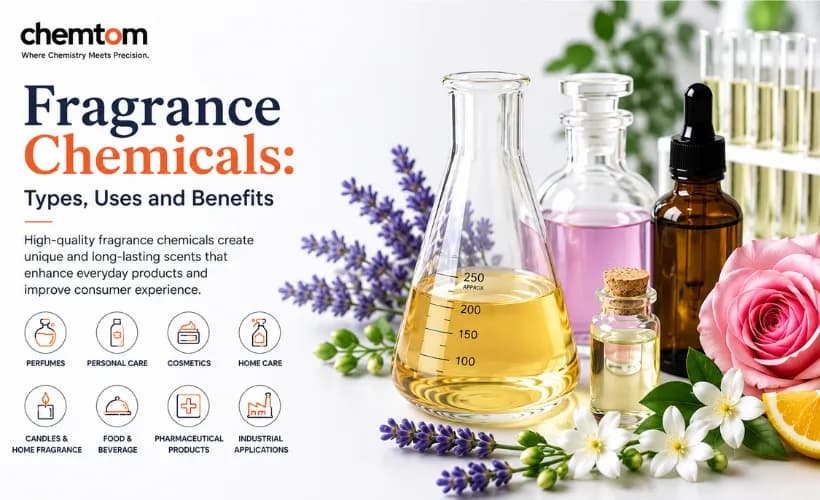
Fragrance is one of the most important characteristics influencing consumer perception of a product. Whether it's a luxury perfume, skincare product, household cleaner, candle, or air freshener, a pleasant and consistent scent enhances the overall user experience. Behind these fragrances are carefully selected fragrance chemicals that help manufacturers create unique, stable, and long-lasting scent profiles.
As industries continue to develop innovative products, the demand for high-quality fragrance ingredients has grown significantly. Modern fragrance chemicals provide formulation flexibility, batch-to-batch consistency, and reliable performance, making them essential across numerous manufacturing sectors.
This guide explores the different types of fragrance chemicals, their uses, benefits, applications, and key factors to consider when selecting the right ingredients for your formulations.
What Are Fragrance Chemicals?
Fragrance chemicals are individual aromatic compounds used to create or enhance scents in a wide range of industrial and consumer products. They may be naturally derived, synthetically produced, or nature-identical, depending on the intended application and formulation requirements.
Unlike essential oils, which contain many naturally occurring compounds, fragrance chemicals are single molecules with distinct aromatic characteristics. By blending different fragrance chemicals in precise ratios, formulators can develop customized fragrance profiles with improved consistency and stability.
How Do Fragrance Chemicals Work?
Every fragrance chemical has a unique molecular structure that interacts with the olfactory receptors in the human nose. When multiple fragrance chemicals are blended, they create layered scent profiles known as:
Top Notes – The first impression of the fragrance.
Middle Notes – The main body or character of the fragrance.
Base Notes – Long-lasting scents that remain after the top notes fade.
Formulators carefully balance these notes to achieve fragrances that remain pleasant throughout a product's lifecycle while maintaining stability during manufacturing and storage.
Types of Fragrance Chemicals
Understanding the different types of fragrance chemicals helps manufacturers choose the right ingredients for their products.
Natural Fragrance Chemicals
These compounds are extracted from natural sources such as flowers, fruits, spices, herbs, woods, and citrus peels. They are commonly used where naturally derived ingredients are preferred.
Synthetic Fragrance Chemicals
Synthetic fragrance chemicals are manufactured through controlled chemical processes to provide consistent quality, improved stability, and a wide variety of scent profiles. They are widely used in industrial applications due to their reliability and scalability.
Nature-Identical Fragrance Chemicals
These compounds are chemically identical to naturally occurring fragrance molecules but are produced through synthetic methods. They offer the same aromatic characteristics while ensuring consistent quality and availability.
Specialty Fragrance Chemicals
These are designed for specific industrial applications where enhanced stability, long-lasting performance, or compatibility with complex formulations is required.
Key Features and Benefits of Fragrance Chemicals
Manufacturers prefer fragrance chemicals because they provide several technical and commercial advantages.
Consistent Fragrance Performance
Fragrance chemicals deliver uniform scent quality across production batches, helping maintain product consistency.
Wide Variety of Fragrance Profiles
From floral and fruity to woody, citrus, spicy, herbal, musky, and oriental notes, fragrance chemicals enable endless formulation possibilities.
Enhanced Stability
Many fragrance chemicals are formulated to remain stable under varying manufacturing conditions, temperatures, and storage environments.
Improved Formulation Flexibility
Individual fragrance compounds can be blended to create customized scent profiles tailored to specific products and market preferences.
Reliable Supply
Compared to some natural extracts, fragrance chemicals are often more consistently available, supporting uninterrupted production.
Cost-Effective Production
Manufacturers can achieve desired fragrance profiles efficiently while maintaining quality and controlling production costs.
How Fragrance Chemicals Improve Industrial Performance
For manufacturers, product consistency is essential. Variations in fragrance can affect customer satisfaction, product quality, and brand reputation.
Using high-quality fragrance chemicals helps manufacturers:
Maintain batch-to-batch consistency
Improve fragrance stability
Reduce formulation variability
Support large-scale production
Enhance product appeal
Simplify quality control
Improve manufacturing efficiency
Extend product shelf life
These advantages make fragrance chemicals an integral part of modern product development.
Uses of Fragrance Chemicals Across Different Industries
Fragrance chemicals are used across a wide range of industries to improve the sensory appeal of products, create distinctive scent profiles, and deliver a consistent customer experience. Below are some of the most common fragrance chemicals uses in industrial manufacturing.
Perfume and Fine Fragrance
The perfume industry is one of the largest users of fragrance chemicals. Perfumers blend different fragrance compounds to create unique scent compositions with balanced top, middle, and base notes.
Common uses include:
Fine perfumes
Eau de parfum
Eau de toilette
Body mists
Deodorants
Fragrance concentrates
These fragrance chemicals help create long-lasting and consistent fragrances that meet consumer expectations.
Personal Care Products
Fragrance chemicals are widely used in personal care products to provide pleasant and refreshing scents while enhancing the overall user experience.
Common uses include:
Shampoos
Conditioners
Body washes
Bath products
Hand soaps
Moisturizers
Lotions
Face cleansers
Hair care products
Manufacturers carefully select fragrance chemicals that remain stable and compatible with cosmetic formulations.
Cosmetics and Beauty Products
In the cosmetics industry, fragrance chemicals help improve product appeal by masking the natural odor of ingredients and creating premium fragrance profiles.
Common uses include:
Face creams
Lip care products
Makeup
Serums
Skincare products
Beauty formulations
Consistent fragrance quality contributes to a better consumer experience.
Home Care and Cleaning Products
Many household cleaning products use fragrance chemicals to leave a fresh and pleasant scent after use.
Typical uses include:
Laundry detergents
Fabric softeners
Floor cleaners
Dishwashing liquids
Toilet cleaners
Surface cleaners
Air fresheners
High-quality fragrance chemicals ensure the fragrance remains stable throughout the product's shelf life.
Candle and Home Fragrance Products
Fragrance chemicals are commonly used in home fragrance products to create long-lasting and appealing scents.
Products include:
Scented candles
Reed diffusers
Wax melts
Room sprays
Incense products
These products require fragrance chemicals with excellent diffusion and thermal stability.
Pharmaceutical and Healthcare Products
Certain pharmaceutical and healthcare products use fragrance chemicals to improve the overall sensory experience and help mask unpleasant odors.
Examples include:
Medicated creams
Oral care products
Healthcare formulations
Wellness products
Suitable fragrance chemicals enhance product acceptance without affecting formulation performance.
Industrial and Specialty Products
Beyond consumer products, fragrance chemicals are also used in industrial formulations where odor improvement or fragrance enhancement is required.
Typical uses include:
Industrial cleaners
Odor-control formulations
Specialty chemical products
Institutional cleaning solutions
Working with an experienced fragrance chemicals supplier helps manufacturers source high-quality ingredients that meet technical and performance requirements.
Choosing the Right Fragrance Chemicals: Key Factors to Evaluate
Selecting the appropriate fragrance chemicals goes beyond finding an appealing scent. The right ingredients can influence product quality, formulation stability, manufacturing efficiency, and customer satisfaction. Before making a purchasing decision, consider the following aspects.
Understand Your Product Requirements
Different products require different fragrance characteristics. A fragrance used in a perfume may not perform the same way in a detergent or body lotion. Define your end-use application before selecting fragrance chemicals.
Evaluate Ingredient Quality
High-quality fragrance chemicals provide consistent aroma, better stability, and predictable performance throughout the manufacturing process. Reviewing product specifications helps ensure the material meets your formulation requirements.
Check Compatibility with Your Formula
Every formulation contains unique ingredients. Fragrance chemicals should blend well with the base formulation without affecting colour, texture, or product performance. Compatibility testing before large-scale production is always recommended.
Consider Stability and Shelf Life
Temperature, light exposure, and storage conditions can influence fragrance performance. Choosing stable fragrance chemicals helps maintain scent quality throughout the product's intended shelf life.
Review Technical Documentation
Professional suppliers typically provide technical documents such as:
Technical Data Sheet (TDS)
Safety Data Sheet (SDS)
Certificate of Analysis (COA), where applicable
These documents support quality control, regulatory compliance, and informed purchasing decisions.
Partner with a Reliable Supplier
A dependable supplier offers more than just products. Consistent inventory, technical assistance, responsive customer service, and reliable deliveries contribute to smooth production and long-term business success.
Conclusion
Fragrance chemicals play a vital role in creating products that deliver a pleasant, consistent, and memorable sensory experience. Their versatility allows manufacturers to formulate fragrances for perfumes, cosmetics, personal care, home care, healthcare, and many other industrial applications.
Understanding the different types, fragrance chemicals uses, and benefits enables businesses to select suitable ingredients that improve product quality, support efficient manufacturing, and maintain consistency across production batches.
By working with an experienced supplier like Chemtom, manufacturers gain access to reliable fragrance chemical solutions, technical expertise, and dependable sourcing that support long-term business success.
Looking for High-Quality Fragrance Chemicals?
Whether you're developing perfumes, cosmetics, personal care products, home care formulations, or specialty industrial solutions, choosing the right fragrance chemicals is key to achieving consistent product quality.
Chemtom offers a diverse portfolio of quality fragrance chemicals backed by reliable sourcing, technical expertise, and responsive customer support.
Contact Chemtom today to discuss your requirements and discover fragrance chemical solutions tailored to your business.