
Industrial Applications of Essential Oils
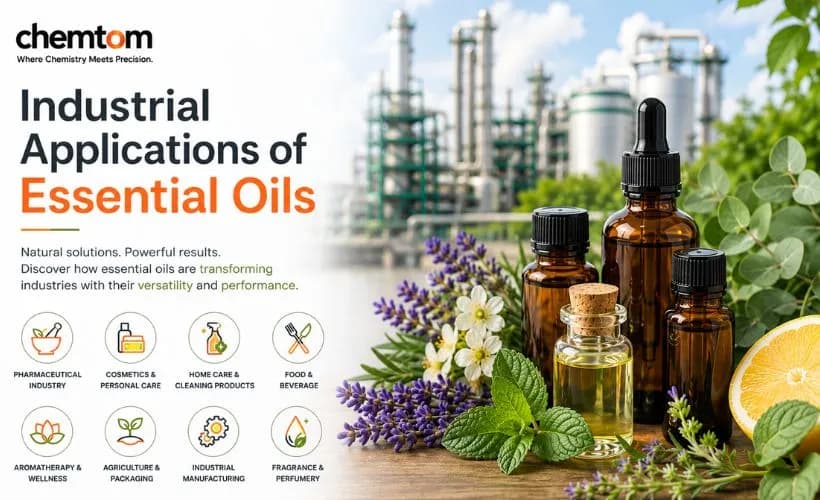
Essential oils have become valuable ingredients across various industries due to their distinctive aromatic properties, natural origin, and formulation versatility. Extracted from different parts of plants such as flowers, leaves, seeds, roots, bark, and citrus peels, essential oils are widely used in manufacturing products for personal care, cosmetics, food and beverages, pharmaceuticals, home care, and industrial formulations.
As consumer demand for naturally derived ingredients continues to grow, the use of industrial essential oils has expanded significantly. Manufacturers rely on these oils to enhance product quality, improve fragrance and flavour profiles, and support innovative product development while maintaining consistent production standards.
This guide explores the industrial applications of essential oils, their benefits, and the factors businesses should consider when selecting the right essential oils for their manufacturing needs.
What Are Essential Oils?
Essential oils are concentrated, volatile plant extracts obtained through methods such as steam distillation, cold pressing, or solvent extraction. They contain naturally occurring aromatic compounds responsible for the characteristic fragrance and properties of plants.
Each essential oil possesses a unique chemical composition, making it suitable for different industrial applications. Popular examples include lavender oil, peppermint oil, eucalyptus oil, lemon oil, orange oil, tea tree oil, rosemary oil, and clove oil.
How Do Essential Oils Work?
Essential oils contain naturally occurring compounds such as terpenes, esters, aldehydes, ketones, and alcohols. These compounds contribute to their aroma and functional characteristics.
When incorporated into industrial formulations, essential oils enhance product fragrance, improve sensory appeal, and contribute to the desired product profile. Manufacturers carefully select oils based on compatibility, stability, concentration, and intended application to achieve consistent performance throughout production.
Key Features and Benefits of Essential Oils
Industries continue to adopt essential oils for industry because they provide several manufacturing and formulation advantages.
Natural Plant-Derived Ingredients
Essential oils are obtained from botanical sources, making them suitable for products that incorporate naturally derived ingredients.
Distinctive Aroma Profiles
Each oil offers unique fragrance characteristics, allowing manufacturers to create customised scent and flavour formulations.
Formulation Flexibility
Essential oils can be blended with other ingredients to develop unique products across multiple industries.
Consistent Product Quality
High-quality industrial essential oils help manufacturers maintain consistent fragrance, flavour, and product performance across production batches.
Wide Industrial Compatibility
Essential oils are compatible with numerous product categories, making them versatile ingredients for industrial manufacturing.
Reliable Supply for Manufacturing
Working with a trusted supplier ensures access to consistent-quality essential oils that support uninterrupted production.
How Essential Oils Improve Industrial Performance
Manufacturers require ingredients that perform consistently under commercial production conditions. High-quality industrial essential oils support efficient manufacturing by improving formulation consistency and product quality.
Key advantages include:
Consistent aroma across production batches
Improved product differentiation
Enhanced consumer appeal
Greater formulation flexibility
Reliable manufacturing performance
Better quality control
Support for product innovation
Consistent raw material quality
Industrial Applications of Essential Oils
Essential oils are widely used across multiple industries because of their aromatic characteristics and formulation versatility. Below are some of the most common essential oil applications in industrial manufacturing.
Personal Care Industry
The personal care sector is one of the largest users of essential oils. They are incorporated into formulations to provide natural fragrance and enhance the sensory experience of finished products.
Common uses include:
Shampoos
Conditioners
Body washes
Face cleansers
Moisturisers
Massage oils
Hair oils
Bath products
Skincare formulations
Cosmetics Industry
Essential oils are frequently used in cosmetic products to create pleasant fragrance profiles and improve product appeal.
Common applications include:
Face creams
Serums
Lip care products
Makeup
Beauty oils
Facial masks
Manufacturers select oils based on fragrance profile, formulation compatibility, and product requirements.
Fragrance and Perfume Industry
The perfume industry relies heavily on essential oils to create distinctive fragrance compositions.
Typical products include:
Fine perfumes
Eau de parfum
Eau de toilette
Body sprays
Deodorants
Fragrance blends
Different essential oils contribute top, middle, and base notes to fragrance formulations.
Food and Beverage Industry
Certain food-grade essential oils are used as natural flavouring ingredients in food and beverage manufacturing.
Applications include:
Beverages
Bakery products
Confectionery
Dairy products
Flavoured snacks
Herbal teas
Manufacturers carefully select essential oils that comply with food safety standards.
Pharmaceutical Industry
The pharmaceutical industry uses essential oils in selected healthcare and wellness formulations where they contribute to product characteristics and sensory appeal.
Examples include:
Cough syrups
Lozenges
Topical creams
Ointments
Wellness products
Home Care and Cleaning Products
Home care manufacturers use essential oils for industry to develop naturally fragranced cleaning products.
Applications include:
Floor cleaners
Surface cleaners
Dishwashing liquids
Laundry detergents
Fabric conditioners
Air fresheners
Aromatherapy and Wellness Products
Essential oils play an important role in the wellness industry.
Products include:
Diffuser oils
Massage blends
Wellness formulations
Spa products
Relaxation products
Industrial and Specialty Products
Beyond consumer goods, essential oils are also incorporated into various industrial formulations where fragrance enhancement or odour management is required.
Examples include:
Industrial cleaning products
Institutional hygiene products
Specialty formulations
Odour-control solutions
These diverse essential oil applications demonstrate why industries continue to adopt industrial essential oils across multiple manufacturing sectors.
Factors to Consider When Selecting Essential Oils
Selecting the right essential oils is crucial for achieving consistent product quality, formulation stability, and manufacturing efficiency. Before purchasing industrial essential oils, manufacturers should evaluate several important factors.
Product Application
The intended application determines the type of essential oil required. Oils used in cosmetics may differ from those used in food, pharmaceuticals, personal care, or home care products. Choosing application-specific oils ensures optimal performance.
Purity and Quality
High-quality essential oils provide better consistency, aroma, and formulation performance. Review product specifications and quality standards before making a purchasing decision.
Source of the Essential Oil
Essential oils are extracted from various plant parts, including flowers, leaves, bark, seeds, roots, and fruit peels. Understanding the botanical source helps ensure the oil meets your product requirements.
Extraction Method
The extraction process can influence the quality and composition of an essential oil. Common extraction methods include:
Steam distillation
Cold pressing
Solvent extraction
Selecting oils produced through suitable extraction methods helps maintain product consistency.
Stability and Compatibility
Essential oils should remain stable throughout manufacturing, packaging, storage, and transportation. They should also be compatible with other formulation ingredients to ensure consistent product performance.
Technical Documentation
A reliable supplier should provide:
Technical Data Sheet (TDS)
Safety Data Sheet (SDS)
Certificate of Analysis (COA), where applicable
These documents support quality assurance, regulatory compliance, and product traceability.
Reliable Supply
Consistent availability of raw materials is essential for uninterrupted production. Partnering with a dependable supplier helps minimise procurement risks and production delays.
Common Mistakes to Avoid When Buying Essential Oils
Selecting essential oils without proper evaluation can lead to inconsistent product quality, formulation issues, and increased manufacturing costs. Avoid these common mistakes.
Buying Based Only on Price
Choosing the lowest-priced option may compromise quality and consistency. Evaluate purity, performance, and supplier reliability in addition to cost.
Ignoring Product Specifications
Every essential oil has unique characteristics. Always review its botanical source, extraction method, purity, and recommended applications before purchasing.
Overlooking Compatibility Testing
Essential oils should be tested within your formulation to ensure they perform well with other ingredients and remain stable throughout the product's shelf life.
Not Verifying Documentation
Technical documentation provides valuable information about quality, handling, storage, and product specifications. Never purchase industrial essential oils without reviewing the relevant documents.
Choosing an Inexperienced Supplier
An experienced supplier can provide technical guidance, consistent product quality, and dependable sourcing, helping reduce procurement challenges.
Ignoring Long-Term Supply Requirements
Reliable sourcing is essential for large-scale manufacturing. Consider the supplier's inventory, logistics capabilities, and ability to support long-term production.
Why Industries Prefer Essential Oils
The demand for essential oils continues to grow because they offer versatility, consistent quality, and broad formulation possibilities across multiple industries.
Industries prefer essential oils for industry because they provide:
Natural plant-derived ingredients
Distinctive aroma profiles
Excellent formulation flexibility
Consistent product quality
Wide industrial compatibility
Reliable manufacturing performance
Support for product innovation
Strong consumer preference for naturally derived ingredients
Broad applications across multiple sectors
How to Choose a Reliable Essential Oils Supplier
Selecting the right supplier is as important as selecting the right ingredient. A dependable supplier helps ensure product consistency, reliable deliveries, and technical support throughout the procurement process.
When choosing an essential oils supplier, consider the following:
Wide portfolio of essential oils
Consistent product quality
Reliable sourcing network
Complete technical documentation
Industry expertise
Responsive customer support
Timely deliveries
Long-term supply capability
At Chemtom, we supply a diverse range of industrial essential oils for manufacturers across the personal care, fragrance, food, pharmaceutical, home care, and specialty industries. Our focus is on providing quality products, dependable sourcing, and technical assistance that support efficient manufacturing.
Conclusion
Essential oils have become indispensable ingredients in modern industrial manufacturing. Their natural origin, distinctive aromatic properties, and formulation versatility make them suitable for a wide range of products, including personal care, cosmetics, fragrances, food and beverages, pharmaceuticals, home care products, and specialty formulations.
Understanding the various essential oil applications and selecting the right industrial essential oils helps manufacturers improve product quality, maintain consistency, and support efficient production. By considering factors such as purity, extraction method, stability, compatibility, and supplier reliability, businesses can make informed purchasing decisions that contribute to long-term success.
Working with an experienced supplier like Chemtom provides access to quality essential oils, dependable supply, and technical support to meet evolving industrial requirements.
Looking for High-Quality Essential Oils?
Whether you're manufacturing personal care products, cosmetics, fragrances, food and beverages, pharmaceuticals, or home care solutions, selecting the right essential oils is key to delivering consistent quality and performance.
Chemtom offers a comprehensive range of industrial essential oils backed by reliable sourcing, technical expertise, and responsive customer support.
Contact Chemtom today to discuss your requirements and discover essential oil solutions tailored to your industry.