
Ethyl Hexanoate: Fruity Flavor Compound and Industrial Applications
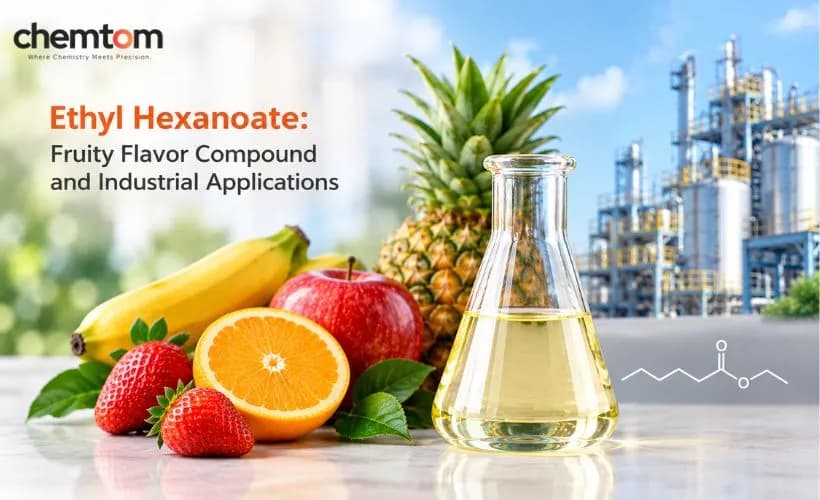
Ethyl Hexanoate is an important ester used in flavor and fragrance formulations because of its distinctive fruity aroma. Also known as ethyl caproate, this organic compound is widely recognized for sensory notes associated with apple, pineapple, fruit gum, and brandy. Its combination of aroma characteristics, chemical stability, and compatibility with flavor systems makes it useful across food, beverage, fragrance, and other industrial applications.
For businesses sourcing flavor and aroma chemicals, understanding the properties, applications, quality requirements, and supply considerations of Ethyl Hexanoate is important for selecting the right grade and maintaining consistent formulation performance.
Ethyl Hexanoate Flavor Profile
The Ethyl Hexanoate flavor profile is one of its most commercially valuable characteristics. The compound can contribute fruity, sweet, tropical, and slightly wine-like sensory impressions to a formulation.
FEMA identifies apple peel, pineapple, fruit gum, brandy, and overripe fruit among its characteristic flavor descriptors. These sensory notes allow formulators to use Ethyl Hexanoate as part of carefully balanced flavor compositions rather than relying on it as a standalone aroma material.
In practical formulation work, the final sensory effect depends on concentration, the surrounding ingredients, the application matrix, and interactions with other flavor compounds. As a result, Ethyl Hexanoate is often incorporated as one component of a broader flavor system.
Ethyl Hexanoate in the Food Industry
One of the major applications of Ethyl Hexanoate is as a flavoring ingredient. The U.S. FDA's food-substance database identifies Ethyl Hexanoate, CAS 123-66-0, as a flavoring agent or adjuvant under 21 CFR 172.515.
Its fruity character makes it relevant to formulations where fruit-associated aroma is required. Depending on regulatory requirements and formulation design, applications can include:
Fruit-flavored food formulations
Confectionery products
Baked goods
Ice cream and frozen desserts
Beverage flavor systems
Dairy and fermented food flavor profiles
Ethyl Hexanoate can also occur naturally in certain foods and fermented products. Its presence in food aroma profiles demonstrates why this ester is valuable when developing fruit-forward sensory compositions.
For commercial food applications, however, the appropriate regulatory status, purity, dosage, and intended-use requirements should always be checked for the destination market.
Ethyl Hexanoate in Beverages
Fruit and fermentation-associated aroma compounds play an important role in beverage sensory profiles. Ethyl Hexanoate can contribute fruity characteristics to beverage flavor systems and is also associated with the aroma profiles of fermented products.
Its pineapple, apple, and fruit-gum-like notes can be useful when developing or adjusting fruit-oriented beverage formulations. The compound is particularly relevant when a formulation requires a recognizable fruity top or supporting note.
The actual sensory performance depends on the complete flavor composition. Experienced formulators generally evaluate Ethyl Hexanoate alongside other esters, aldehydes, alcohols, acids, and aroma materials to achieve the intended profile.
Ethyl Hexanoate Industrial Applications
The Ethyl Hexanoate industrial applications extend beyond food flavoring. Its use as a flavor and fragrance ingredient makes it relevant to manufacturers and formulators working with aroma-based products.
1. Flavor Formulations
Ethyl Hexanoate is used as a flavoring ingredient where fruity and tropical sensory characteristics are desired. It can help build apple, pineapple, and other fruit-associated profiles.
2. Fragrance Formulations
The compound can also be used in fragrance compositions because of its distinctive fruity aroma. PubChem identifies Ethyl Hexanoate among fragrance ingredients as well as flavoring agents.
In fragrance development, it may contribute a fresh, fruity character or support a broader accord containing multiple aroma chemicals.
3. Food and Beverage Aroma Systems
Flavor houses can use Ethyl Hexanoate as one building block within compound flavor systems. Its relatively recognizable sensory profile makes it useful when developing fruit-oriented formulations.
4. Fermentation and Aroma Research
Ethyl Hexanoate is also relevant to analytical and research work involving food aroma, fermentation, and volatile compounds. Its occurrence in fermented foods and beverages makes it a useful compound when studying aroma development.
5. Specialty Chemical Applications
As an organic ester, Ethyl Hexanoate can also be relevant to specialty chemical applications where ester properties and formulation compatibility are required. The exact suitability depends on the technical specification and intended process.
Why Ethyl Hexanoate Quality Matters
For flavor and fragrance manufacturers, chemical identity alone is not enough. Consistent quality can directly influence formulation performance and sensory reproducibility.
Important purchasing parameters can include:
Assay or purity
Appearance
Odour profile
Refractive index
Specific gravity
Acid value
Identification by appropriate analytical methods
Batch consistency
Packaging and storage conditions
Safety Data Sheet (SDS)
Certificate of Analysis (COA)
JECFA's published specification for Ethyl Hexanoate includes parameters such as minimum assay, acid value, refractive index, specific gravity, boiling point, and identification testing.
For international buyers, documentation should also be aligned with the destination market and the intended application.
Storage and Handling Considerations
Ethyl Hexanoate is a volatile organic liquid and should be handled according to its applicable Safety Data Sheet and local workplace requirements. Commercial suppliers and users should consider appropriate container selection, ventilation, temperature control, ignition-source management, and personal protective equipment.
For example, commercial chemical data identifies Ethyl Hexanoate as a flammable liquid, reinforcing the importance of proper storage and handling procedures.
Storage conditions should be established according to the supplier's current SDS, product grade, packaging, and applicable regulations.
How to Choose an Ethyl Hexanoate Supplier
Selecting an Ethyl Hexanoate supplier involves more than comparing prices. Buyers should evaluate the supplier's ability to provide consistent material, reliable documentation, suitable packaging, and dependable export support.
When sourcing Ethyl Hexanoate supplier India options, consider the following:
Product quality: Confirm the required purity, grade, and specification before placing an order.
Documentation: Request a current COA and SDS and verify that documentation corresponds to the supplied batch.
Packaging: Select packaging appropriate for the order quantity, transportation conditions, and destination requirements.
Supply capability: Discuss MOQ, availability, lead time, and recurring supply requirements in advance.
Export support: For international procurement, check whether the supplier can support export documentation, shipping coordination, and destination-specific requirements.
Technical communication: A reliable supplier should be able to provide clear product information and respond to application or specification-related questions.
Ethyl Hexanoate Supplier India
India is an important sourcing base for chemicals, flavor materials, and specialty industrial products. Buyers looking for an Ethyl Hexanoate supplier India can evaluate suppliers based on product specifications, documentation, commercial terms, packaging, and export capabilities.
Chemtom supplies and exports industrial, specialty, and aroma chemicals to customers in India and international markets. For businesses sourcing Ethyl Hexanoate for flavor, fragrance, or industrial applications, Chemtom can support enquiries related to product availability, specifications, packaging, and bulk requirements.
Conclusion
Ethyl Hexanoate (CAS 123-66-0) is a versatile ester recognized for its characteristic fruity aroma and its role in flavor and fragrance applications. Its apple, pineapple, fruit-gum, and related sensory notes make it valuable in flavor formulations, while its aroma profile also supports fragrance applications. Regulatory and technical databases from organizations including FEMA, FDA, and JECFA provide important reference information for its identity and use as a flavoring substance.
For commercial procurement, buyers should look beyond the chemical name and evaluate purity, specification, documentation, packaging, supply consistency, and export support. Working with an experienced Ethyl Hexanoate supplier can help businesses source material suited to their formulation and operational requirements.
Source Ethyl Hexanoate from Chemtom
Looking for Ethyl Hexanoate (CAS 123-66-0) for flavor, fragrance, or industrial requirements? Contact Chemtom for product specifications, availability, packaging options, and bulk supply enquiries. Our team can assist buyers in India and international markets with sourcing and export requirements.