
Grapefruit Mercaptan: The Key Compound Behind Citrus Aroma Profiles
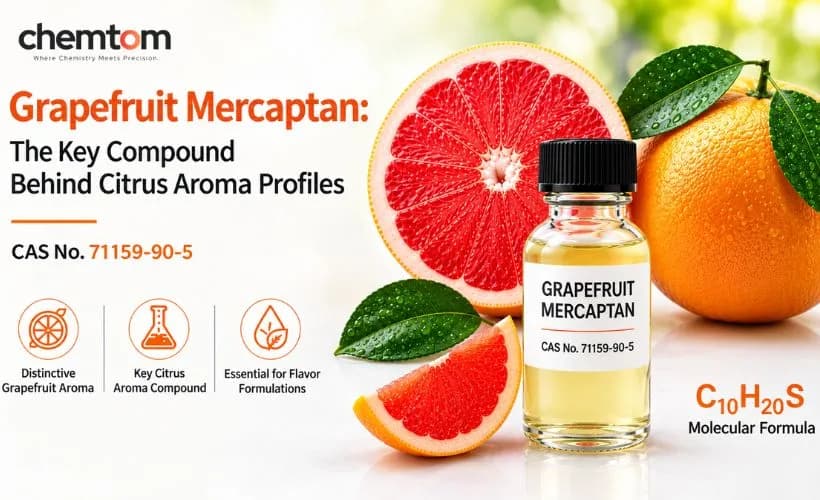
Citrus flavours are widely recognised for their fresh, juicy, green, and highly distinctive sensory character. Creating this profile in a commercial flavour formulation, however, requires more than simply adding a citrus oil or fruit extract. Specific aroma molecules are often used in carefully controlled quantities to reproduce the characteristic notes associated with grapefruit.
Grapefruit Mercaptan is one such flavour chemical. It is a sulfur-containing aroma compound valued for its ability to contribute powerful grapefruit-like sensory characteristics to flavour compositions. Its distinctive character makes it relevant to flavourists developing citrus profiles for beverages, food products, and other flavour systems.
For manufacturers and procurement teams, understanding the characteristics, uses, handling requirements, and selection considerations associated with Grapefruit Mercaptan can help support better ingredient decisions.
This guide explains what Grapefruit Mercaptan is, how it contributes to citrus aroma profiles, where it is used, and what manufacturers should consider when sourcing it.
What Is Grapefruit Mercaptan?
Grapefruit Mercaptan is a sulfur-containing flavour compound associated with the characteristic aroma of grapefruit. It is particularly valued for contributing powerful grapefruit-like, sulfurous, citrus, and fresh sensory nuances to flavour formulations.
The compound is commonly referenced by CAS No. 71159-90-5. Because sulfur-containing aroma compounds can have very strong sensory impact at low concentrations, they are typically handled and formulated carefully by flavour professionals.
Understanding the Grapefruit Mercaptan Aroma
The distinctive Grapefruit Mercaptan aroma comes from its molecular structure and the way the compound interacts with the human olfactory system.
Unlike simple citrus notes that may primarily provide fresh, sweet, or acidic impressions, sulfur-containing compounds can contribute highly characteristic nuances associated with freshly cut or naturally occurring citrus fruit.
In a carefully designed flavour formulation, a small amount of a potent aroma compound can significantly influence the overall sensory profile.
This is why flavourists generally evaluate such materials as part of a complete formulation rather than considering them as standalone flavour ingredients.
What Does Grapefruit Mercaptan Smell Like?
The sensory character can be described broadly as:
Grapefruit-like
Citrus
Fresh
Green
Sulfurous
Fruity
Zesty
The exact perception depends on concentration, formulation matrix, other flavour ingredients, and processing conditions.
How Does Grapefruit Mercaptan Work in Flavour Formulations?
A flavour formulation works through the interaction of multiple volatile compounds. When Grapefruit Mercaptan is incorporated into a citrus composition, its strong sensory character can help reinforce the grapefruit identity of the formulation.
A flavourist may combine it with other citrus aroma compounds to build different sensory dimensions.
For example:
Citrus compounds can provide brightness.
Fruity compounds can add sweetness and juiciness.
Green notes can create freshness.
Other sulfur compounds can contribute complexity.
Grapefruit Mercaptan can reinforce the characteristic grapefruit identity.
The objective is not necessarily to make one ingredient dominate the formulation. Instead, flavourists balance multiple ingredients to achieve the desired sensory profile.
Key Features and Benefits of Grapefruit Mercaptan
Powerful Aroma Impact
One of the defining characteristics of Grapefruit Mercaptan is its strong sensory impact. This allows flavourists to use it as a highly effective component when developing grapefruit-oriented flavour profiles.
Distinctive Grapefruit Character
It can help differentiate a grapefruit flavour from generic citrus profiles by introducing characteristic grapefruit nuances.
Formulation Flexibility
As an individual flavour chemical, it can be incorporated into customised flavour systems alongside other citrus and fruity ingredients.
Supports Sensory Complexity
Grapefruit flavours often require a balance between fresh, bitter, green, fruity, and sulfurous notes. Grapefruit Mercaptan can contribute to this complexity when appropriately formulated.
Useful in Citrus Flavour Development
For flavour manufacturers developing citrus compositions, the compound can serve as a specialised ingredient for grapefruit-type profiles.
How Grapefruit Mercaptan Supports Flavour Development
Developing a commercially successful flavour involves more than selecting ingredients with desirable aromas. The flavour must also perform consistently within the finished product.
Grapefruit Mercaptan can contribute to flavour development by helping formulators:
Strengthen grapefruit identity
Add sensory complexity
Build realistic citrus profiles
Differentiate grapefruit formulations from generic citrus flavours
Develop customised flavour systems
Fine-tune flavour intensity during formulation
Its role is particularly relevant when a formulation requires a recognisable grapefruit character rather than simply a broad citrus impression.
Applications of Grapefruit Mercaptan
Grapefruit Mercaptan is primarily relevant to flavour chemicals and citrus flavour development. Its use depends on the formulation, applicable regulations, and the intended end product.
Beverage Flavours
Citrus flavours are widely used in beverage development. Grapefruit-type flavour systems may be incorporated into products where a fresh, tart, or distinctive citrus character is desired.
Potential flavour categories include:
Citrus beverages
Flavoured waters
Carbonated beverages
Fruit beverages
Functional beverages
The finished flavour system typically combines multiple flavour ingredients rather than relying on Grapefruit Mercaptan alone.
Food Flavouring
Grapefruit-style flavour compositions can also be developed for food products where citrus character is required.
Possible uses include:
Confectionery
Desserts
Bakery products
Gummies
Sauces
Flavoured food products
The appropriate formulation depends on the food matrix, processing conditions, and regulatory requirements.
Citrus Flavour Concentrates
Flavour houses may use Grapefruit Mercaptan as a component of concentrated citrus flavour systems. It can be combined with other citrus aroma compounds to create specific sensory profiles.
This approach allows flavourists to adjust:
Freshness
Fruity character
Citrus intensity
Green notes
Grapefruit authenticity
Specialty Flavour Formulations
Specialised flavour developers may incorporate grapefruit aroma compounds into customised formulations designed for specific customer requirements.
This can be particularly useful when a standard citrus flavour does not provide the desired sensory profile.
Factors to Consider Before Selecting Grapefruit Mercaptan
Selecting a specialised flavour chemical requires technical evaluation rather than relying only on aroma description or price.
Product Specification
Review the supplier's specification for identity, purity, appearance, and other relevant quality parameters.
For Grapefruit Mercaptan CAS 71159-90-5, correct identification is particularly important because flavour chemicals with similar descriptions may have significantly different sensory properties.
Sensory Profile
Evaluate the material in the intended flavour system. A compound can smell different when diluted or combined with other ingredients.
Regulatory Requirements
The material should be evaluated against the regulatory requirements applicable to the intended market and end use.
Stability
Consider how the compound behaves during processing and storage. Factors such as temperature, light, oxygen, packaging, and formulation composition can influence volatile flavour ingredients.
Documentation
A professional flavour chemical supplier should provide appropriate technical and safety documentation, such as:
Technical Data Sheet
Safety Data Sheet
Certificate of Analysis, where applicable
Product specification
Relevant regulatory information
Supply Reliability
For commercial production, consistent availability and batch-to-batch quality are important considerations when selecting a supplier.
Why Industries Use Grapefruit Mercaptan
The primary value of Grapefruit Mercaptan lies in its distinctive sensory contribution. Generic citrus ingredients can provide broad citrus impressions, but specialised compounds allow flavourists to create more precise profiles.
Industries and flavour developers may use Grapefruit Mercaptan because it offers:
Distinctive grapefruit character
Strong sensory impact
Formulation flexibility
Support for realistic citrus profiles
Compatibility with broader flavour development strategies
Opportunities for customised flavour creation
How to Choose the Right Grapefruit Mercaptan Supplier
When sourcing Grapefruit Mercaptan, manufacturers should evaluate suppliers based on technical capability and supply reliability.
Consider whether the supplier provides:
Correct product identification and CAS information
Consistent product specifications
Quality-control documentation
Appropriate packaging
Reliable supply
Technical assistance
Responsive customer support
Experience with flavour chemicals
Chemtom supplies flavour chemicals for industrial customers and focuses on product quality, dependable sourcing, technical support, and customer requirements. For specialised ingredients such as Grapefruit Mercaptan, clear specifications and consistent supply are important for supporting flavour development and production planning.
Why Choose Chemtom for Flavour Chemicals?
Chemtom supports customers looking for flavour chemical ingredients by focusing on practical sourcing requirements and consistent product quality.
Key areas of focus include:
Industry Expertise
Understanding flavour ingredients and their industrial requirements helps support informed product selection.
Product Quality
Consistent specifications are important when specialised flavour chemicals are incorporated into commercial formulations.
Reliable Supply
Dependable sourcing helps manufacturers plan production and reduce the risk of raw material interruptions.
Technical Support
Clear product information and technical assistance can help procurement and formulation teams evaluate ingredients effectively.
Customer-Focused Approach
Chemtom works with customers to understand their requirements and provide suitable flavour chemical sourcing solutions without making unsupported performance claims.
Conclusion
Grapefruit Mercaptan is a specialised flavour chemical that plays an important role in developing distinctive grapefruit and citrus aroma profiles. Its strong sensory character makes it particularly useful when flavourists need to introduce characteristic grapefruit nuances into a formulation.
With CAS No. 71159-90-5, the material can be evaluated as an individual ingredient within broader flavour systems. Its effectiveness depends on appropriate formulation, concentration, product matrix, processing conditions, and regulatory requirements.
For manufacturers, selecting the right grade and working with a dependable flavour chemical supplier can help support consistent product development and commercial production.
Chemtom provides flavour chemical sourcing solutions for businesses seeking quality ingredients, reliable supply, and technical support for their flavour development requirements.
Source Grapefruit Mercaptan with Confidence
Looking for Grapefruit Mercaptan (71159-90-5) for your flavour formulations? Get in touch with Chemtom for product information and supply support.