
Applications of Aroma Chemicals Across Different Industries
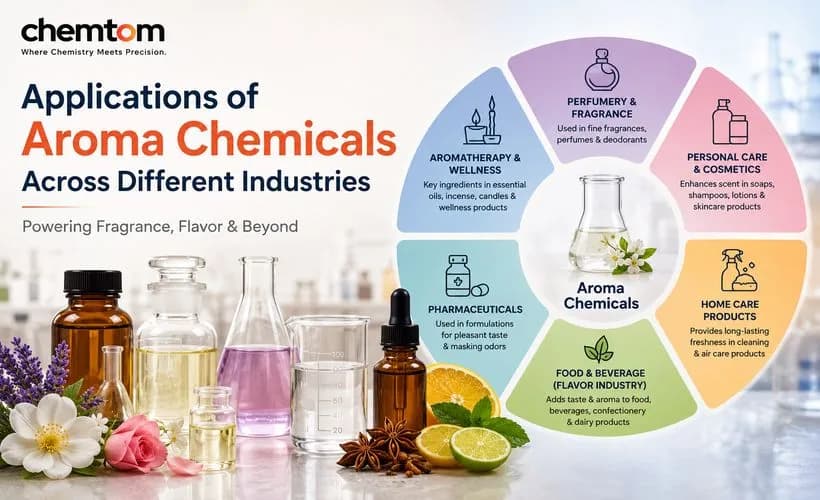
The demand for innovative fragrances and flavors continues to grow across industries, making aroma chemicals applications more important than ever. From perfumes and cosmetics to food, home care, and pharmaceutical products, aroma chemicals help manufacturers create consistent sensory experiences while maintaining product quality and production efficiency.
Unlike natural extracts, which can vary in composition due to seasonal and geographical factors, industrial aroma chemicals provide predictable performance, formulation flexibility, and reliable availability. These advantages make them a preferred choice for manufacturers looking to develop high-quality products at scale.
Whether you're a product developer, procurement manager, engineer, or industrial buyer, understanding how aroma chemicals are used across different sectors can help you make informed sourcing and formulation decisions.
What Are Aroma Chemicals Applications?
Aroma chemicals applications refer to the various industrial uses of individual fragrance and flavor compounds that enhance the scent, taste, or overall sensory appeal of products. These compounds may be naturally derived, synthetically produced, or nature-identical, depending on the intended application.
Unlike essential oils, which are complex mixtures of numerous compounds, aroma chemicals are individual molecules with specific fragrance or flavor characteristics. Manufacturers combine these compounds in carefully controlled formulations to achieve desired product profiles.
How Do Aroma Chemicals Applications Work?
Every aroma chemical has a unique molecular structure that interacts with human olfactory (smell) or taste receptors. By blending multiple compounds in precise proportions, formulators can create complex fragrance or flavor profiles that meet specific product requirements.
Industrial manufacturers rely on aroma chemicals because they allow greater control over:
Fragrance intensity
Product consistency
Stability during production
Batch-to-batch uniformity
Shelf-life performance
Cost-effective formulation
This precision makes aroma chemicals essential ingredients in modern industrial manufacturing.
Key Features and Benefits of Aroma Chemicals Applications
The widespread adoption of industrial aroma chemicals is driven by several technical and commercial advantages.
Consistent Product Quality
Aroma chemicals maintain uniform fragrance and flavor characteristics across production batches, reducing formulation variability.
Formulation Flexibility
Manufacturers can combine different aroma chemicals to create unique scent profiles ranging from floral and citrus to woody, fruity, spicy, and musky notes.
Improved Stability
Many aroma chemicals are formulated to remain stable under different manufacturing and storage conditions, supporting long-term product quality.
Scalable Manufacturing
Reliable raw material availability enables manufacturers to produce products consistently on both small and large production scales.
Cost Optimization
Using aroma chemicals allows formulators to achieve desired fragrance profiles while optimizing production costs.
Regulatory Compliance
Many industrial aroma chemicals are supplied with supporting documentation such as Technical Data Sheets (TDS), Safety Data Sheets (SDS), and Certificates of Analysis (COA), helping manufacturers meet quality and regulatory requirements.
How Aroma Chemicals Applications Improve Industrial Performance
Across manufacturing industries, product consistency is a critical success factor. Variations in fragrance or flavor can affect customer satisfaction, product acceptance, and brand reputation.
Using carefully selected aroma chemicals helps manufacturers:
Standardize product quality
Reduce formulation inconsistencies
Improve production efficiency
Simplify quality control processes
Enhance customer experience
Support long-term product stability
Minimize raw material variability
These advantages contribute to more efficient manufacturing operations and improved product performance..
Applications of Aroma Chemicals Across Different Industries
Perfumery and Fragrance Industry
The perfume industry is one of the largest users of aroma chemicals. Perfumers blend hundreds of aroma molecules to create distinctive fragrance compositions that include top, middle, and base notes.
Common applications include:
Fine fragrances
Body sprays
Deodorants
Eau de parfum
Eau de toilette
Fragrance concentrates
Aroma chemicals help perfumers achieve consistency while offering endless possibilities for fragrance innovation.
Personal Care Industry
Personal care products require pleasant, long-lasting fragrances that remain stable throughout the product's shelf life.
Common products include:
Shampoos
Conditioners
Body washes
Soaps
Moisturizers
Lotions
Face cleansers
Hair care products
Industrial aroma chemicals enhance the sensory appeal of these products while maintaining formulation compatibility.
Cosmetics Industry
Cosmetic manufacturers use aroma chemicals to improve user experience by masking base ingredient odors and creating premium fragrance profiles.
Applications include:
Makeup products
Lip care
Skin creams
Serums
Face masks
Beauty products
Consistent fragrance performance contributes to higher product acceptance among consumers.
Home Care Industry
Home care products rely heavily on fragrance to communicate cleanliness and freshness.
Examples include:
Laundry detergents
Fabric softeners
Floor cleaners
Dishwashing liquids
Toilet cleaners
Air fresheners
Surface disinfectants
Industrial aroma chemicals are selected for their stability, compatibility, and long-lasting fragrance performance.
Food and Beverage Industry
Certain food-grade aroma chemicals play an important role in creating appealing flavors and aromas in food products.
Applications include:
Bakery products
Confectionery
Dairy products
Beverages
Processed foods
Flavored syrups
Manufacturers use carefully selected compounds to deliver consistent flavor profiles while meeting applicable food safety and regulatory standards.
Pharmaceutical Industry
Fragrance and flavor compounds are often incorporated into pharmaceutical formulations to improve the sensory experience of medicines and healthcare products.
Common applications include:
Syrups
Oral suspensions
Chewable tablets
Nutritional supplements
Medicated oral care products
Suitable aroma chemicals can help improve patient acceptance by masking unpleasant tastes or odors.
Aromatherapy and Wellness Products
The wellness sector also benefits from aroma chemicals in products designed to create pleasant ambient experiences.
Applications include:
Reed diffusers
Scented candles
Room sprays
Essential oil blends
Wellness products
These formulations are designed to deliver consistent fragrance performance while supporting a wide range of scent profiles.
Industrial and Specialty Chemical Manufacturing
Beyond consumer products, aroma chemicals are also used in specialty industrial formulations where odor control, fragrance enhancement, or customized scent profiles are required.
Manufacturers often rely on an experienced aroma chemicals supplier to source high-quality materials that meet technical specifications and production requirements.
Factors to Consider Before Selecting Aroma Chemicals
Choosing the right aroma chemicals is essential for ensuring product quality, formulation stability, regulatory compliance, and long-term manufacturing efficiency. Before purchasing, evaluate the following factors:
Product Purity
High-purity aroma chemicals help deliver consistent fragrance and flavor performance while reducing formulation inconsistencies.
Intended Application
Select aroma chemicals specifically designed for your product category, whether it's perfumes, personal care products, home care formulations, food applications, or industrial products.
Stability
Consider thermal stability, oxidation resistance, storage conditions, and compatibility with other formulation ingredients.
Regulatory Compliance
Verify that the materials comply with relevant industry standards and are supplied with appropriate documentation where applicable.
Technical Documentation
A reliable supplier should provide:
Technical Data Sheet (TDS)
Safety Data Sheet (SDS)
Certificate of Analysis (COA), where applicable
Supply Reliability
Consistent product availability is critical for uninterrupted manufacturing operations. Evaluate the supplier's inventory management, logistics capabilities, and delivery performance.
Technical Support
An experienced aroma chemicals supplier should offer guidance on product selection, compatibility, and application-specific recommendations.
Common Mistakes to Avoid
Even experienced buyers can make purchasing decisions that affect product quality, production efficiency, and long-term costs. Avoid these common mistakes when sourcing industrial aroma chemicals.
Selecting Based Only on Price
Low-cost products may compromise consistency, stability, or overall formulation performance. Evaluate quality and technical suitability alongside pricing.
Ignoring Product Specifications
Always review purity levels, recommended applications, storage conditions, and technical data before making a purchase.
Overlooking Documentation
Purchasing without requesting essential technical documents may create quality control and regulatory challenges later.
Choosing an Inexperienced Supplier
A knowledgeable supplier provides valuable technical assistance, reliable sourcing, and consistent product quality.
Failing to Test Compatibility
Not every aroma chemical performs the same way in every formulation. Conduct compatibility testing before commercial-scale production.
Not Planning for Supply Continuity
Unexpected supply interruptions can delay production schedules. Partner with suppliers that maintain dependable inventory and logistics support.
Why Industries Prefer Aroma Chemicals Applications
Manufacturers across multiple industries continue to expand the use of aroma chemicals applications because they provide measurable operational and commercial advantages.
Industries prefer aroma chemicals because they offer:
Consistent fragrance and flavor quality
Better formulation flexibility
Improved product stability
Reliable raw material availability
Scalable manufacturing support
Greater control over fragrance development
Cost-efficient production
Batch-to-batch consistency
Broad application compatibility
Faster product development cycles
These advantages enable manufacturers to maintain product quality while improving production efficiency and customer satisfaction.
How to Choose the Right Aroma Chemicals
Selecting suitable aroma chemicals depends on your formulation goals, industry requirements, and product performance expectations.
Consider these best practices:
Define your end-use application.
Identify the desired fragrance or flavor profile.
Review technical specifications and purity.
Verify regulatory compliance.
Evaluate compatibility with existing formulations.
Request product documentation.
Assess supplier reliability and technical expertise.
Consider long-term supply capability.
Compare quality rather than price alone.
Working with an experienced aroma chemicals supplier simplifies product selection and helps reduce procurement risks.
Why Choose Chemtom for Aroma Chemicals?
Choosing the right supplier is just as important as selecting the right product. At Chemtom, we supply a wide range of industrial aroma chemicals that support manufacturers across fragrance, flavor, personal care, home care, pharmaceutical, and specialty chemical industries.
Businesses choose Chemtom because of our:
Extensive industry knowledge
Broad portfolio of aroma chemicals
Consistent product quality
Reliable sourcing capabilities
Responsive technical assistance
Dependable supply chain
Customer-focused approach
Efficient order fulfillment
Our team works closely with customers to help identify suitable aroma chemicals based on specific application requirements and manufacturing goals.
Conclusion
The growing demand for high-performance fragrance and flavor formulations has significantly increased the importance of aroma chemicals applications across modern manufacturing industries. Whether used in perfumes, cosmetics, detergents, pharmaceuticals, food products, or wellness solutions, aroma chemicals provide the consistency, flexibility, and reliability needed for today's industrial production.
Understanding the various applications of aroma chemicals, evaluating product quality, and partnering with a trusted aroma chemicals supplier can help businesses improve product performance, maintain manufacturing efficiency, and support long-term growth.
With a comprehensive portfolio of industrial aroma chemicals and a commitment to reliable sourcing and customer support, Chemtom helps businesses find solutions that align with their formulation and production requirements.
Ready to Source Quality Aroma Chemicals?
Whether you're developing fragrances, personal care products, home care formulations, food products, or specialty industrial solutions, choosing the right aroma chemicals is essential for consistent quality and product performance.
Chemtom offers a comprehensive range of industrial aroma chemicals backed by reliable sourcing, technical expertise, and dependable customer support.
Contact Chemtom today to discuss your application requirements and discover aroma chemical solutions tailored to your business.